Shaocong Wang
Shaocong Wang is a Postdoctoral Researcher at the Sustainable Computing Laboratory, University of Notre Dame, working with Prof. Yiyu Shi. He obtained his PhD from the University of Hong Kong, supervised by Prof. Zhongrui Wang. Prior to that, he obtained his Master's degree from OPTIMAL (now iOPEN) in Chinese Academy of Sciences, supervised by Prof. Yuan Yuan and Prof. Xiaoqiang Lu. He earned his Bachelor's degree from the Jilin University.
His research interests includes on-device learning, software hardware co-design, computing-in-memory, and AI hardware acceleration.
Email: swang34 [at] nd [dot] edu
Selected Publications
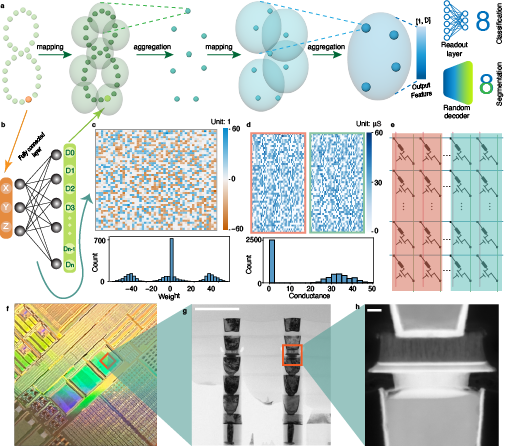
Random resistive memory-based deep extreme point learning machine
Nature Communications, 2025
paper / code
A CIM-based random network: deep extreme point learning machine for unifed learning on point clouds, event data, and iamges. The network performs decently with most of parameters being random (>90%)!
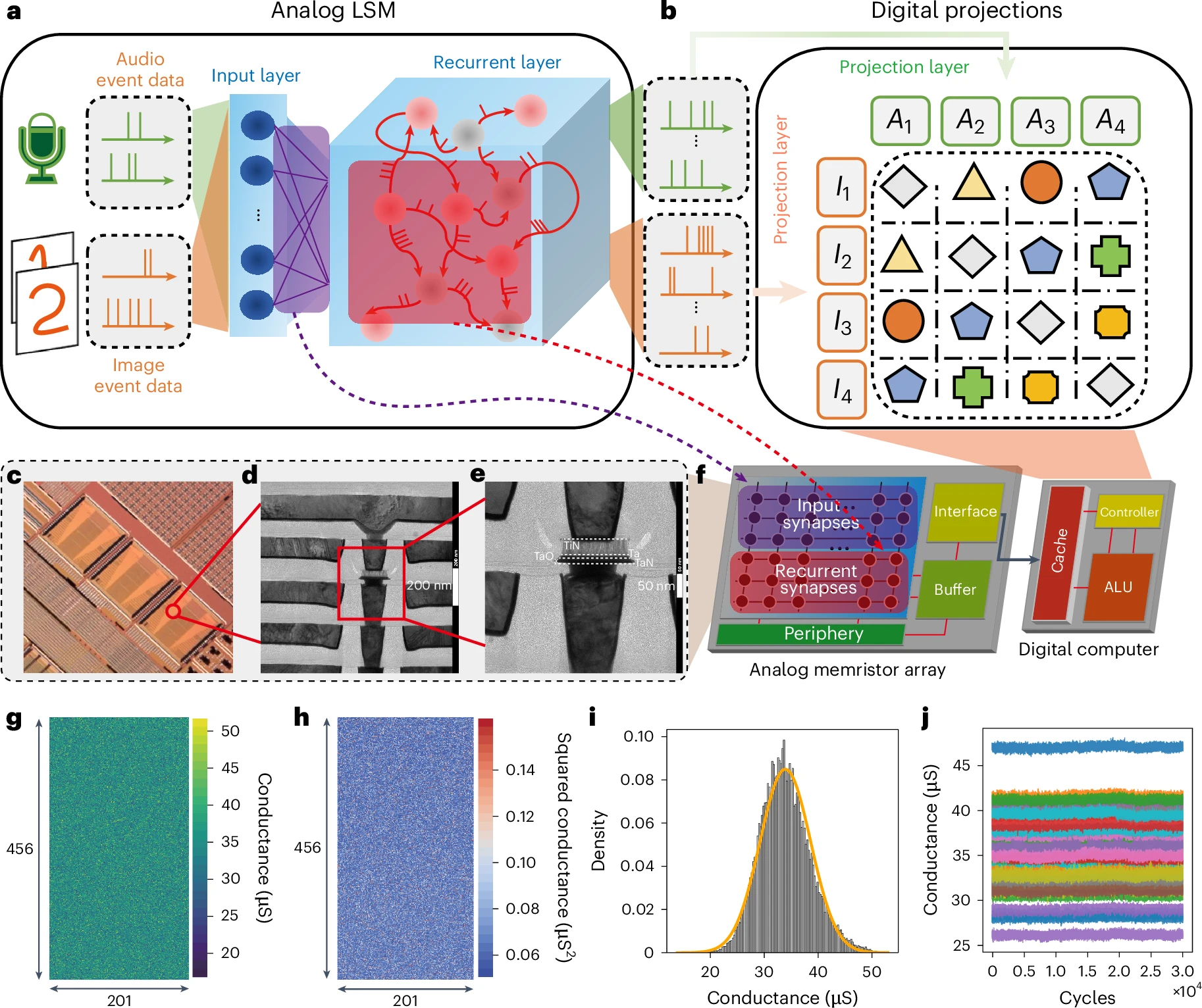
Resistive memory-based zero-shot liquid state machine for multimodal event data learning
Nature Computational Science, 2025
paper
A CIM-based random SNN for zero shot cross-modal contrastive learning.
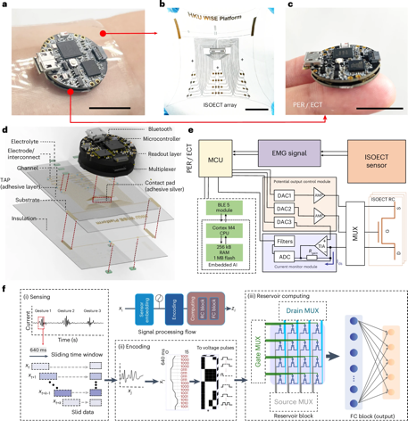
Wearable in-sensor computing platform based on stretchable organic electrochemical transistors
Nature Electronics, 2024
paper
An in-sensor computing system for biosignal acquisition and processing. The OECT array server as stretch sensors, not only sensing the stretch but also processing the signal. The backend system for post processing, communication, and power supply are integrated on a coin-size system.
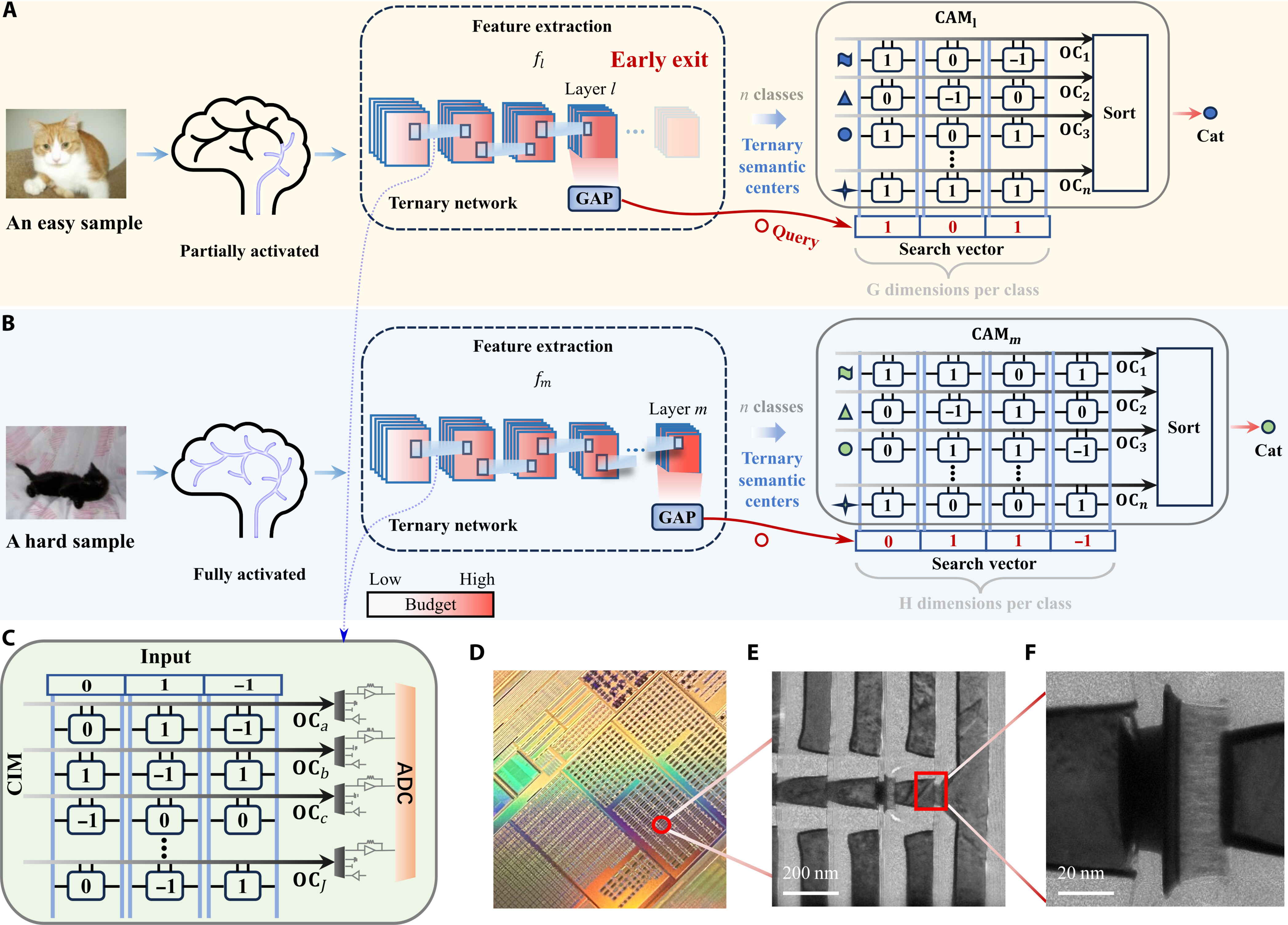
Semantic memory–based dynamic neural network using memristive ternary CIM and CAM for 2D and 3D vision
Science Advances, 2024
paper
A semantic memory–based dynamic neural network using both ternary CIM and CAM structures.
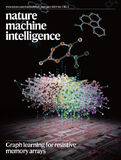
Echo state graph neural networks with analogue random resistive memory arrays
Nature Machine Intelligence, 2023
cover page / paper / code
A hardware-software co-designed computing-in-memory system to solve the efficiency issues in graph learning. The hardware is a resistive memory array with its cells just randomly programmed at the begining, while the weights of our GNN are also randomly fixed except the last layer. The system can avoid the von Neumann bottleneck, the programming issues of resistive memory cells, and the training cost of GNNs.
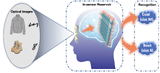
Wearable in-sensor reservoir computing using optoelectronic polymers with through-space charge-transport characteristics for multi-task learning
Nature Communications, 2023
paper / code
A device-algorithm co-design is proposed to emulate human retina and the affordable learning paradigm. Algorithms designed to fit the characters of a novel optoelectronic device, with in-sensor computing.

Few-shot graph learning with robust and energy-efficient memory-augmented graph neural network (MAGNN) based on homogeneous computing-in-memory
2022 IEEE Symposium on VLSI Technology and Circuits (VLSI Technology and Circuits), 2022
paper
A computing-in-memory system for memory-augmented graph neural networks.
Convolutional Echo‐State Network with Random Memristors for Spatiotemporal Signal Classification
Advanced Intelligent Systems, 2022
paper
A co-design for efficient time series processing. Both the convolutional layer and the echo state (recurrent) layer are randomly fixed, and are physically programmed on a resistive memory array.
Memristive crossbar arrays for storage and computing applications
Advanced Intelligent Systems, 2021
paper
A review paper on memristive crossbar arrays.
Talks
Efficient AI with computing-in-memory technologies
College of Artificial Intelligence, Beihang University, Beijing, China, 2024
Computing-in-memory leveraging its randomness
College of Integrated Circuit, Huazhong University of Science and Technology, Wuhan, China, 2024
Neural computing in random resistive memory
Chinese Academy of Sciences International Frontiers of Science Symposium, Xishuangbanna, China, 2023
基于随机电阻存储器的计算加速 (Computing acceleration based on random resistive memories)
Beijing interdesciplinary sciences conference, Beijing, China, 2023
Teaching
ELEC3846 Numerical Methods and Optimization, teaching assistant, 2021-2022, 2022-2023.
ELEC6049 Digital system design techniques, teaching assistant, 2020-2021.
Mentoring
Bachelor's students in HKU: Houhui Ma, Tsz Yiu Chan, Andy Lao, Chan Yung Kim.
Master's students in HKU: Tianchen Xie, Shicong Sun.
Awards
Best Student Paper Award in IEEE Student Symposium on Electron Device and Solide-State Circuits, Hong Kong, 2023.
HKU Foundation Publication Award, Hong Kong, 2024.
Daily Life
In my spare time, I enjoy music (mainly rock - some of my favorite bands include The Cranberries, Eagles, Green Day) and literature (Vladimir Nabokov, Pablo Neruda, Jorge Luis Borges, etc.). They make me feel so full of life. I like to take photos and serverd in the HKU New College Photography Club. I also play video games sometimes. Back in Hong Kong, I used to play badminton and go hiking with friends.